
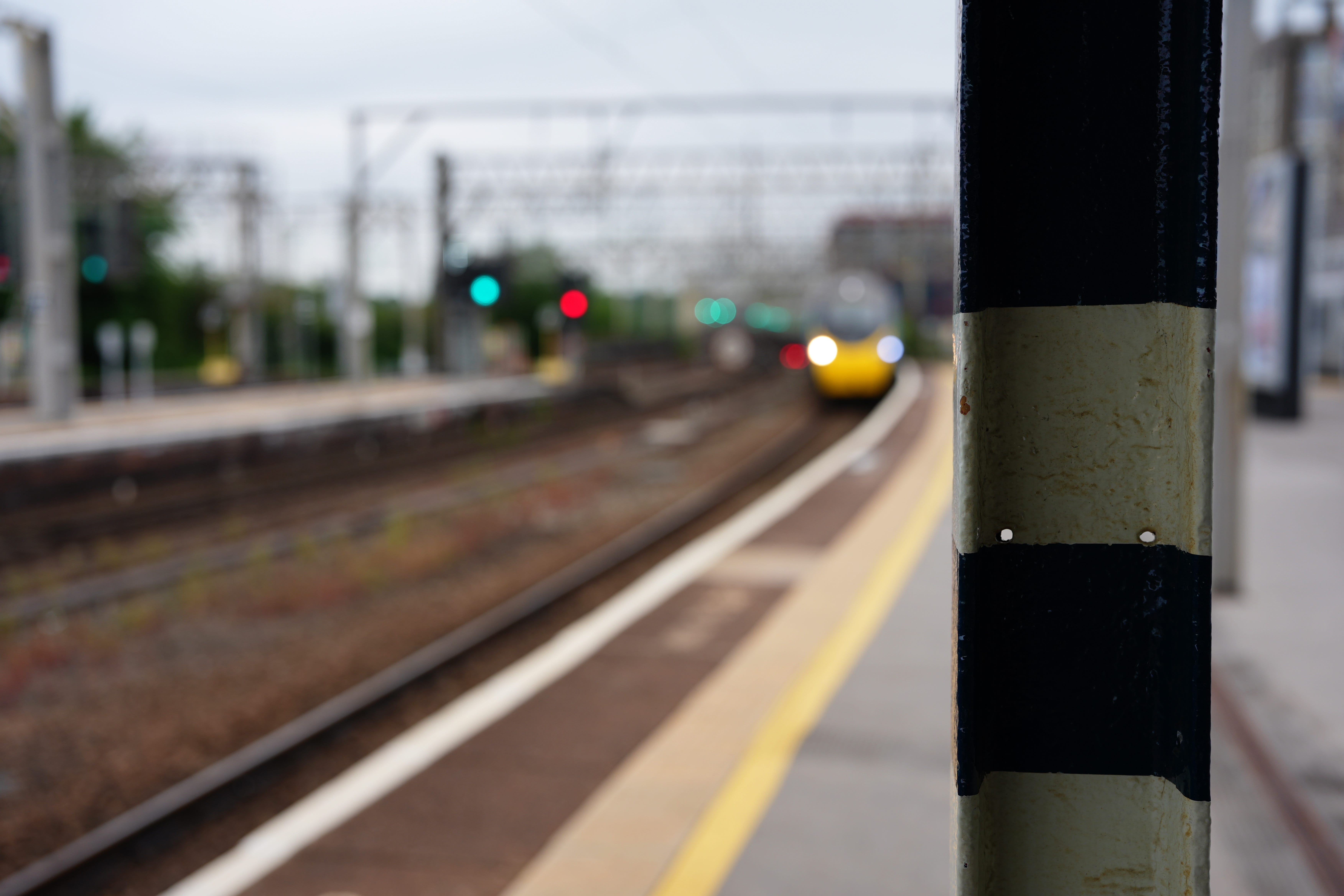
The other day, I saw an article in the I paper on the newsstand—apparently amid a spiralling budget, there’s a fresh round of calls to axe HS2. As somebody that uses the West Coast Main Line every week, this makes me cringe. We already, at best, will wait until 2035 to use it, and it is only going to go as far as Birmingham.1
The British Railway system has a capacity problem, a reliability problem, and an attitude problem. All of those issues need tackling if public infrastructure is going to improve, and HS2 is the test-case that defines the whole.
But speed is not the main point of the new line. The objective is capacity, and not just capacity for fast intercity services, either, but for those local regional and commuter services between small towns that have been so neglected. The complicated bit is explaining why that is.
Britain’s railways were largely built in the Victorian era, for a different kind of travel. Today, the same lines carry a mix of express intercity trains – the kind which HS2 will take – and stopping local and commuter services, the kind people use to get to work, or pop to a neighbouring town.
This mix is a very inefficient way to run a railway, for a reason that is quite obvious if you think about it: trains cannot overtake each other on the same set of tracks. They would bang into the back of one another if they tried. Not good.
- Jon Stone, The Independent Online, 2019
So, can we do something as basic as build a high-speed rail line in the 21st century?
If the answer is no, then we may as well give up, because we have become sketch-show conservative and parochial, and we deserve what we get as a result.2
This conservatism has taken root at all levels of our society and across the political spectrum. It blinds us to the art of the possible using the banality of our endless now. We can’t have new railways, new infrastructure, because some habitat might be disturbed, some sleepy rural town hear the occasional train.
At least in the former case, this comes from a fear of total loss in the face of environmental collapse, but turning over huge swathes of the English landscape to ecosystem-destroying sheep farms on marginal land is a political choice. Allowing grouse moors to be the site of millions of non native pheasant to be released every year is a political choice. Letting those same moors, denuded of their natural vegetation, flood the towns that lie below them is a political choice.3
Back to HS2; if we didn’t have the most depleted natural ecosystem in Europe, if people my age couldn’t remember bird numbers drastically declining in their own lifetime, would we be as concerned about this trade-off? No we wouldn’t. So it’s bizarre that it’s beyond the realm of possibility to just say “okay, let’s build the railway, but we’re going to create a national park over here.”
We’re so busy trying in vain to wrap our hands around what is left, we’ve lost sight of the obvious fact that we have the ability to create new things. We can create something from nothing, of course, but we can also reshape the old into something new. As the Bomb the Music Industry! song goes, “nothing’s forever, dude.”
How did we lose sight of that fact?
As an adoptive Manc, I have to make the joke—and who wants to go there?
A red hot take.
Obviously there’s quite a bit of debate on each point here. Even the RSPB doesn’t blanket-condemn grouse shooting, for example, though they call for its regulation and say that driven shooting is unsustainable. I, with my more utilitarian, ‘eat the aristos’ hat on, take a harder line on most of these issues.