
Okay, bear with me—normal service will be resumed soon. However, I’m a cycling freak and have become oddly opinionated on children’s bikes. I’m reasonable with a wrench and have built and restored several road bikes,1 so I feel like this isn’t that far out of my lane.
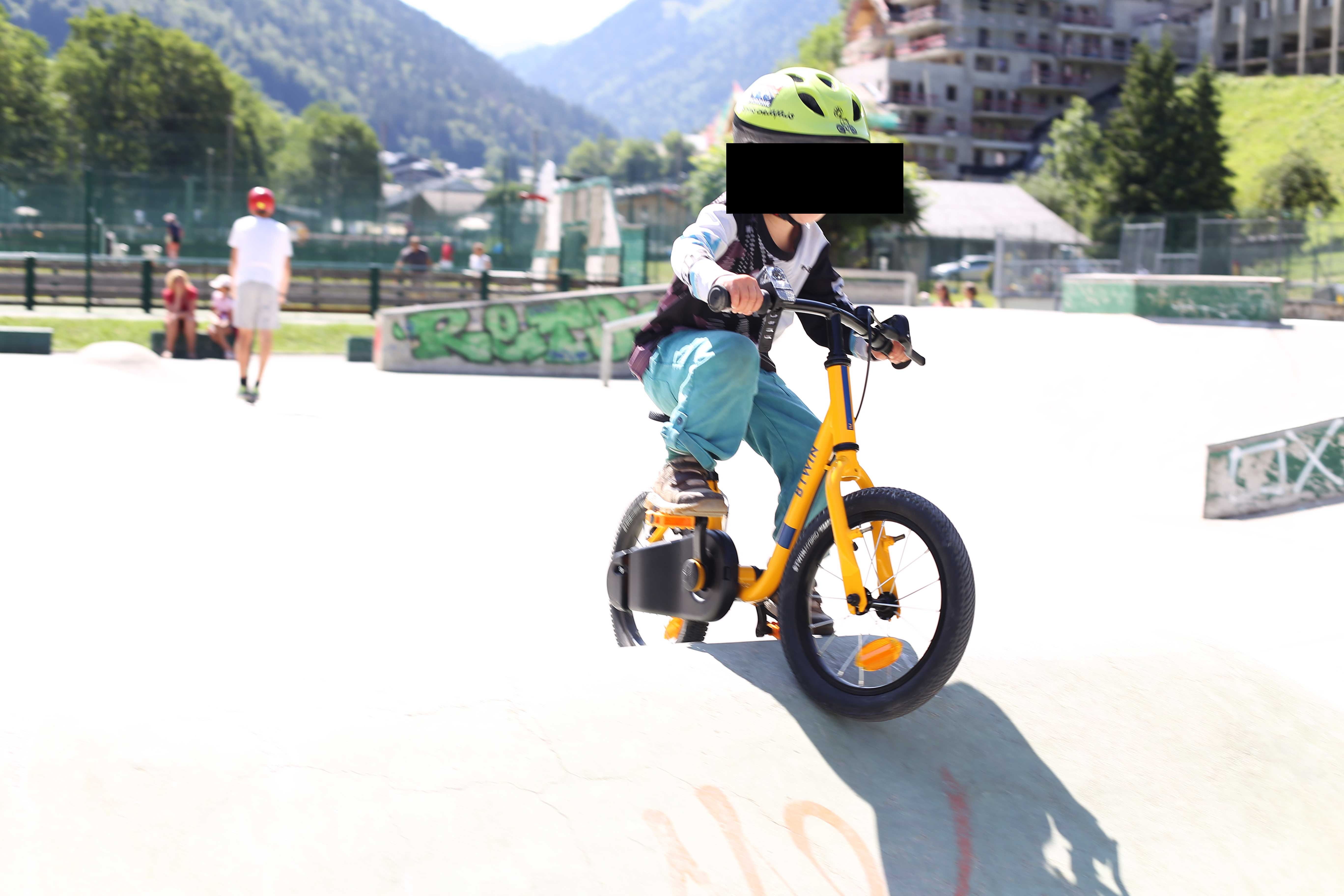
The bike in question is this one.
So, in the spirit of how Total Guitar used to do their reviews, here goes with the top-line scores:
Pros:
+ Great build quality and extra accessories
+ Competitively priced
+ Very lightCons:
- Geometry is too scooter-like for some ages and sizes
- Brakes are trash
- Better second-hand bikes are available for cheaper
FEATURES: 4/5
SOUND QUALITY: 2/5
VALUE FOR MONEY: 4/5
BUILD QUALITY: 4/5
USABILITY: 3/5
OVERALL RATING: 3.5/5
Features
The big selling-point in the walkride series is that it’s a balance bike first, and then a pedal bike second. The pedals and crank arms can both be taken off without tools, and the process is relatively straightforward.
The decision on the 500 versus the 100, which is a beginner bike without the conversion features, priced at about £30 less, will come down to whether you anticipate it being used as a balance bike first.
I’ll cover this in more depth in the usability section, but due to its geometry, I feel like this bike is probably aimed more at 3+ year olds, where I’m used to seeing children aged 2 on a 12-14” balance bike.2
Thus, while I do think this can be used as a balance bike, at the age I mostly see children on balance bikes, this is simply too large due to its geometry. By the time kids are using a bike this size, and especially because the Btwin range seems to trend large due to its large frame versus wheel-size, they are likely to be on pedals. Therefore I’m not really sure the balance bike side is all that much use.
Aside from that, it’s a pretty full-featured child’s bike, with a single gear, front and back caliper brakes, well thought-out chain guard, and step-over frame construction. It even comes with lights and a bell as standard.
Sound Quality
The bike is voiced with a confident low-midrange and none of the ice-pick high frequencies you might expect from a budget option. It stacks well with other overdrives, and can be used to drive a decent tube amp into power-tube saturation without too much effort.3
Value for Money
Value for money is difficult to make a call on. On the one hand, if you compare to other new options in the market, you’re looking at least at about a fifty quid saving on competitors with a similar build quality and weight, while few have the same conversion features. Btwin-win, then?
Not quite. As I mentioned in the features section, the peculiar geometry of the Btwin means I’m dubious that it will be used as a balance bike by very small tots. This throws the value for money in a different light.
A cheap balance bike is as low as £20—since, let’s be honest, you’ll get it second hand. Ours was given to us for free. Thus, the 500 can’t really compete.
Even against other bikes, again, realistically, you should look at used options. Something with minimal use, needing a tiny bit of TLC could be as little as half the price, and there’s a lot of second-hand Cuda, Frog, Islabike and Forme knocking around, all of which are good options that will last through multiple children if well looked-after.
Build Quality
The less you have to say about build quality, the better. This is a solid bike, and there’s no real complaints on this front. Attention to detail shows in areas like the chain guard and accessory bosses, and the ability to adjust and fix small things with minimal tools.
The tyres, like on their adult bikes, are Decathlon’s own, but seem comparable in design and grip to the Kenda tyres that are common to most decent kids’ bikes.
The thing that’s most notable, besides the decent range of colourways, is the weight. It’s below 7kg, which is very good for a starter bike at this price point. With smaller kids, the lighter the better, and this is a good weight for little ones to gain confidence.
Usability
There’s two big issues with the bike. The first is the geometry, and the second is the brakes. Both are likely to be more of an issue if your child is already used to a balance bike with a more ‘bike-like’ geometry, or to using brakes on either a balance bike, or a different pedal bike.
Let me explain.
The issue with the geometry is that, as designed, the handlebars don’t drop very far, because of the size of the head-tube. This means it has a somewhat scooter-like geometry, rather than that of a bike. Perhaps the better analogy would be to a Dutch-style city bike, as opposed to a mountain bike. The body of the rider is pushed further back, and the back straighter, meaning your centre of balance is in a very different place.
On the other hand, even balance bikes often take a more ‘bike-like’ approach, with the weight forward on the bars, and the bars set up lower. In our case, both our son’s balance bike, and his normal bike4 were more like this, meaning he was used to his weight being forward on the handlebars in a more aggressive position.
Although it sounds counterintuitive, I’m pretty convinced the more aggressive position, with its lower centre of gravity, is actually a lot easier for smaller children to navigate successfully.
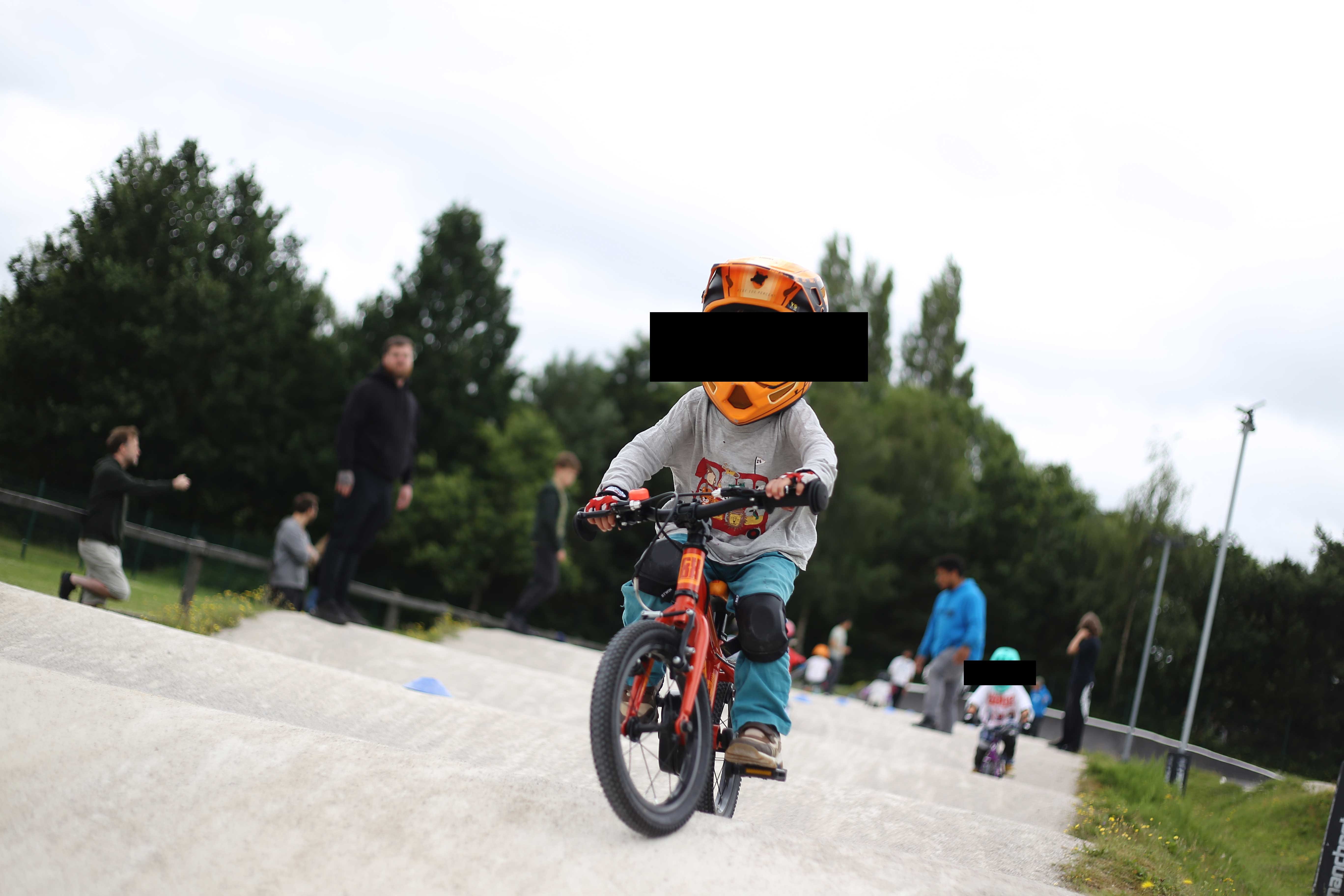
The more obvious problem with this geometry is simple: it really does mean that a 14” Btwin bike is skewed towards children at the larger end of that wheel size. For a 14” mountain-bike style kids bike, you’re aiming at a 3-4 year old before they jump up to a 16” wheel,5 whereas with the Btwin, our son (in the middle of the seat/handlebars sizing for a 14” MTB-style bike) found the minimum height of the handlebars on the Btwin almost too high.
On to the brakes. Decathlon seem very pleased with themselves about how good the brakes are for little kids to use. I don’t know why this is the case.
The brakes are bad. Like, really bad.
They have very little stopping power until pulled tight, and because of the way the paddle is shaped, I’m convinced they’re actually further to reach for small hands than the equivalent Tektro brakes that are common on other kids’ bikes.
Don’t take my word for it though—the true test is confidence.
A week on the flat and our son had no real issues, but after one day in a slightly more hilly location, he had abandoned the brakes and was regularly putting his feet down instead, turning the bike back into a balance bike with added pedals.
When I’m using this for our second, I’m going to rip out the Decathlon brakes and put a single Tektro lever on there instead, because it’s not fit for purpose.
Summary
The Btwin is a lot of bike on paper, and the addition of the balance bike functionality should make it a no-brainer. However, its geometry makes it more useful for larger children, potentially necessitating a 10-12” balance bike for smaller children, while larger kids may never use the balance features. The brakes are downright terrible—however, we found that if you are somewhere flat, that may not be an issue.
If you are somewhere hilly, or planning to do any kind of adventurous activity—be it BMX, pump track, or even gravel or canal towpath trails with any kind of gradient, you’ll need to switch the brakes to something better.
Please ask me about this in person and live to regret it.
To be fair, I do go to balance bike BMXing with the little ones every week, and there are very tiny tots on the track there, so maybe my view is a bit askew.
In case you can’t tell, this bit is a joke.
We were using this while away, and as a future replacement for said cheap balance bike, whose hard foam (ha!) wheels finally had given up the ghost.
In most cases, and there’s a bit of variance between boys and girls, since some boys end up taller, earlier.