
I’ve been thinking recently about the postwar consensus, and wondering whether it was just a fever dream that we retconned onto reality.1
Perhaps the consensus was less a consensus and more a rash fear from policymakers, industrialists and the educational establishment. If we did not have a high-access, widespread drive toward education, and especially higher education, then how could we hope to defeat ‘The Reds’?
At the start of the Cold War, with Gagarin and Sputnik, there was borderline panic that somehow the West had fallen behind its new adversary.
The West needed to catch up.
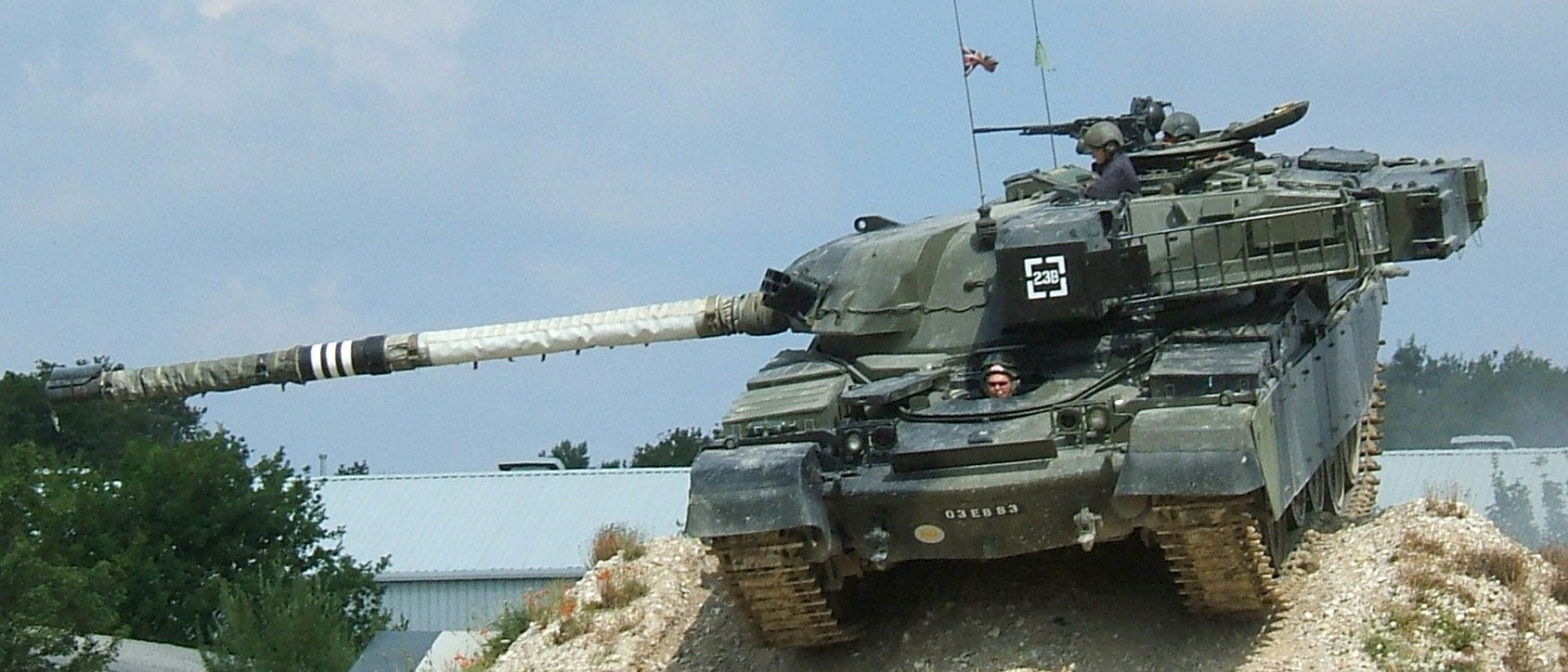
Obviously none of this goes anywhere without the manufacturing jobs in the military-industrial complex to back it up, so some degree of state control is necessary. The idea that we indeed did have a collective enemy, and we were indeed all facing the same direction, is given ideological coherence by ‘negative cohesion’ if nothing else.2 Some programmes, like Apollo, come framed as an effort ‘for all mankind,’3 but I’m not sure we can say the same of the development of FV4201.4
Autobiographically, this makes sense as well—my own father was a defence contractor for most of his career, before moving to the private sector at the end of the Cold War. He went on to build data centres for Oracle, I believe.
On the one hand, to structurally create a certain number of STEM students, you have to cast a wide net. On the other, you need to ensure the general support of the state from all parts of the country—even those that aren’t designing missiles and tanks.
Thus you have the state provide art schools, and make university education free. You then encourage further education for all, and watch the law of averages provide you with the skilled workers that you need for complex industrial manufacture. When they’re not designing aircraft radars, your STEM grads will absorb the cultural output of the art school grads.5

In other words, there is strength in complexity, in pluralism.
Perhaps I’m downplaying the impact of the immediate post-war fear of the Soviet Union. Maybe it wasn’t as clearly thought out as this.6 Additionally, after demobilization there is a rational fear from policymakers of the returning troops. You have a lot of people in your country all of a sudden that have fought and killed for the country, and you would rather they not do it again.7
There are other existential threats that could catalyse our societies in the same way, but these generally run quickly into a problem of incentives. The industrial and political class (and perhaps in the modern day, ‘vector class’ would be the more accurate term)8 have no interest in tackling Global Warming, because to do so would reduce their profits and their political power.
Instead, they fancy their chances of making it through any crisis in their luxury bunkers in New Zealand.
The USSR, on the other hand, had MIRV ICBMs, and no doubt in the event of a ground invasion would have eventually come looking for counter-revolutionaries, no matter how bougie their underground digs.
Perhaps, for whatever reason, that was seen as a more real and compelling threat.
The jumping-off point for this article’s title was the quote from Jack Clark of Anthropic that I referenced in Part 2 of my series on AI.


The quote runs:
People don’t take guillotines seriously. But historically, when a tiny group gains a huge amount of power and makes life-altering decisions for a vast number of people, the minority gets actually, for real, killed.
Today it certainly feels like those creating the most political, social and ecological damage have forgotten that if they don’t voluntarily want to consider others in the body politic out of respect, then they should out of fear. Because in the absence of an external enemy to face, people are looking inward for an enemy. Once people have tired9 of blaming immigrants and trans people for problems caused to them by the industrial and political class, maybe they will get out the guillotines again.
Maybe not. Time will tell.
My gut tells me that if I spent the time I used to write this post doing some research, I would find the answer was ‘yes it was, and it never existed.’
Tell that to the Cambridge Five. Obviously, not everybody agreed, I’m not dumb (though that is something that a dumb person would be at pains to argue).
Which we should be dubious about.
Better known as Chieftain, the first true modern Main Battle Tank (MBT).
And dropouts. My dad was a big Genesis and Peter Gabriel fan, but predictably had no time for the punks.
In fact, I would bet good money that it was not.
I’m reminded of John Christopher’s The Death of Grass as a striking example of this. In the novel, two of the main characters are demobbed soldiers (the novel is set sometime post-war) and very matter-of-factly kill when necessary. I assume he was drawing on his own feelings and experience, as well as his comrades, when he wrote those sections. For a more traumatic take on the mental state of returning soldiers, David Holbrook’s Flesh Wounds is rather extraordinary in its frankness.
As described by McKenzie Wark in Capitalism is Dead: Is This Something Worse?
Or should I say, if they tire.