
Nate Silver’s 2024 book On The Edge is the best non-fiction book I’ve read this year.1 Obviously I’d recommend giving it a read. It’s a great study of risk-taking behaviour, gambling and technology companies, and having worked in and around blockchains for five years, most of it rang uncomfortably true.
Perhaps Silver’s book is the story of psychopaths, not risk takers, being able to reshape a world that can no longer govern their behaviour.
There’s one aspect of it that I think is worth responding to, however, and that’s the fact that narcissism, psychopathy and the Dark Triad personality type aren’t mentioned in the text, other than in one passing quote.
Silver builds a case for two communities, Riverians (risk takers) and Villagers (risk avoiders).2 Throughout the book, there’s attempts to pin down what these personalities might have in common—particuarly on the Riverian side—and ultimately despite a well-written section on neurodivergence and asperger’s, he doesn’t draw any firm conclusions, or examine other conditions.3
“narcissist” or “Narcissist”?
Part way through the chapter Acceleration, after the nominal half-way point of the book, Silver quotes veteran tech journalist Kara Swisher:
I asked Swisher why tech leaders like Thiel and Musk are so obsessed with their media coverage. She didn’t need much time to consider her answer. “It’s because they’re narcissists. They’re all malignant narcissists,” she said.
Similarly to Silver, I’m not going to make any hard and fast conclusions. That’s because as is (already) common for my blog posts, I’m a little out of my lane. Even so, I do wonder if she’s actually being quite specific with the use of medical jargon here, because it tranforms the meaning of the quote.
In everyday use, “narcissist” means “self-centred”; but it has a concrete definition, which we will explore below. Moreover, Narcissism forms part of a triad of behaviours—along with Machiavellianism and Psychopathy4—that together form what is known as the Dark Triad (Paulhus and Williams, 2002).
There’s quite a bit of literature out there on the Dark Triad, and some debate about a central core behaviour, currently hypothesized as aggression.5
The Dark Triad, Narcissism and Psychopathy
So what is the Dark Triad? I’m going to be as concise as possible, quoting the original Paulhus and Williams paper,6 before quoting some definitions from a later paper (since those authors incorporate work post-Paulhus and Williams) on the constituent parts.
Here’s Paulhus and Williams on the Dark Triad:
Despite their diverse origins, the personalities composing this ‘Dark Triad’ share a number of features. To varying degrees, all three entail a socially malevolent character with behavior tendencies toward self-promotion, emotional coldness, duplicity, and aggressiveness. In the clinical literature, the links among the triad have been noted for some time (e.g., Hart & Hare, 1998). The recent development of non-clinical measures of all three constructs has permitted the evaluation of empirical associations in normal populations. As a result, there is now empirical evidence for the overlap of (a) Machiavellianism with psychopathy (Fehr, Samsom, & Paulhus, 1992; McHoskey, Worzel, & Szyarto, 1998), (b) narcissism with psychopathy (Gustafson & Ritzer, 1995), and (c) Machiavellianism with narcissism (McHoskey, 1995). Given such associations, the possibility arises that, in normal samples, the Dark Triad of constructs may be equivalent.
Although they also describe Machiavellianism, Psychopathy and Narcissism (at the time of writing, non-clinical psychopathy was the newest of the three facets to be recognised; “SRP scores predict anti-social behavior in forensic and non-forensic populations”),7 A longer description of each is helpful.
Walker et al. (2022) in a paper on faking good and bad on tests have several useful definitions. Importantly, they make it clear that the three constituent behaviours are not equivalent. First, the triad:
The ‘dark triad’ is an umbrella term for a set of three socially aversive personality traits comprised of narcissism, Machiavellianism, and psychopathy (Paulhus & Williams, 2002). While all three traits are associated with ethical, moral, and socially deviant behavior, among other shared characteristics, they are considered independent of each other. Recent debate relating to a shared common core among the dark triad traits continues, but there is some consensus on the role of antagonism connecting narcissism, Machiavellianism, and psychopathy (Jones & Figueredo, 2013; Jones & Neria, 2015; Paulhus & Williams, 2002). Furthermore, each of the three traits shares exploitative characteristics with goal-focused manipulation of others’ emotions to get what they want.
Then, Narcissism:
While narcissism has traditionally been conceptualized as a personality disorder, mild to extreme sub-clinical characteristics of narcissism are found in non-clinical populations (Raskin & Hall, 1979; Samuel & Widiger, 2008). Accordingly, narcissism is commonly regarded and investigated as a personality trait (Miller & Campbell, 2008) and comprises two facets: grandiose and vulnerable narcissism. As the name suggests, individuals high in grandiose (or “overt”) narcissism are characterized by grandiosity, self-confidence, and exploitation of others and tend to rely on self-validation to maintain self-esteem. When threatened, individuals high in grandiose narcissism tend to blame and devalue others while denying their own weaknesses (Dickinson & Pincus, 2003; Zhang, Luo, Zhao, Zhang, & Wang, 2017).
Vulnerable (or ‘covert’) narcissism tends to rely on external validation. While grandiose fantasies also characterize vulnerable narcissism, people high on vulnerable narcissism tend to oscillate between self-love and self-loathing, thereby exhibiting fragile self-esteem, defensiveness, and resentment (Weiss, Campbell, Lynam, & Miller, 2019). Individuals high in vulnerable narcissism are characteristically hypersensitive to negative feedback and tend to act aggressively when their sense of self is threatened (Wink, 1991). Though grandiose and vulnerable narcissism share several core characteristics such as an antagonistic interpersonal style, self-importance, entitlement, and hypersensitivity to criticism (Dickinson & Pincus, 2003; Krizan & Herlache, 2018; Weiss et al., 2019), there is clear evidence that these two facets are distinct (Krizan & Herlache, 2018; Miller, Vize, Crowe, & Lynam, 2019; Walker et al., 2021).
Does ‘vulnerable’ narcissism sound at all like a billionaire angry at negative media coverage? I won’t over-egg it. Their discussion of Machiavellianism is more terse:
Machiavellianism is commonly understood to be a unidimensional personality construct characterized by goal-focused manipulative and callous social interactions (Christie & Geis, 1970). Individuals high in Machiavellianism tend to be viewed as strategic, capable of delaying gratification for bigger and better rewards in the future, possessing low moral commitment, and engaging in long-term strategic planning with a cold and cynical world-view (Christie & Geis, 1970; Furnham, Richards, & Paulhus, 2013).
Finally, psychopathy is described:
Psychopathy has been typified by interpersonal, affective, and behavioral characteristics, including superficial charm, pathological lying, and lack of empathy, conscience, and remorse (Cleckley, 1951; Hare, 2003). Although clinically identified with antisocial personality disorder, the sub-clinical characteristics of psychopathy, like narcissism, exist on a continuum in the wider population (Berg et al., 2013). Based on Karpman’s (1941) work, enduring classifications of psychopathy make a distinction between two subtypes differing in their etiology and symptomology. Expanding on earlier models, Hare (2003) made a distinction between primary and secondary psychopathy. Both psychopathy facets involve affective elements suggesting some indifference to their own and others’ emotions, each underpinned by an antagonistic interpersonal style (Miller & Lynam, 2012).
Primary psychopathy is characterized by: (a) a lack of guilt and remorse, with elevated levels of callousness, manipulation, and socially desirable behavior (Hare, 2003), (b) having superficial affect (Casey, Rogers, Burns, & Yiend, 2013), and (c) deficits in affective empathy (Wai & Tiliopoulos, 2012). Primary psychopathy is also associated with lower levels of fear (Patrick, Bradley, & Lang, 1993) and lower indications of repentance (Hare, 2003; Lee & Salekin, 2010).
Secondary psychopathy is characterized by higher levels of antisocial behaviors such as aggressiveness, impulsivity, and anxiety (Levenson, Kiehl, & Fitzpatrick, 1995). These types of characteristics are potentially a result of experiencing strong emotions which are unable to be effectively regulated (Hare, 2003). Additionally, individuals high on secondary psychopathy have been shown to possess guilt and fear responses not typically observed in individuals high in primary psychopathy (Lykken, 1995; Wallace, Malterer, & Newman, 2009).
Note the difference between Primary and Secondary psychopathy, and bear that in mind when we talk about Elon Musk later.
So as to not throw out the baby with the bathwater, it’s worth saying that in the original article, the authors don’t advance a strong opinion on how destructive the individual traits might be:
Indeed, Machiavellians and narcissists may be more of an interpersonal irritant than a threat: Data suggest that such characters are a mixed blessing in personal life (Robins & Beer, 2001), interpersonal life (Paulhus, 1998), and some organizational contexts (Hogan, Raskin, & Fazzini, 1990; Robins & Paulhus, 2001). Adaptive interpersonal correlates of subclinical psychopathy may be more difficult to find. Their positive self-view and lack of anxiety, however, can be viewed as adaptive in an intrapsychic sense (Taylor & Armor, 1996).
Indeed, Walker et al.’s “faking good” and “faking bad” paper (using exercises such as a simulated job interview) built on work on the Big Five personality traits which showed people answer according to how they think makes them appear best—meaning such deceit is not the preserve of disordered personalities:8
People are highly motivated to be viewed in a favorable light by others. There is evidence that people distort their responses on personality scales under high-stakes conditions (Sjöberg, 2015). In fact, meta-analytic findings show people can and do substantially change their personality scores when motivated to do so (Birkeland, Manson, Kisamore, Brannick, & Smith, 2006; Viswesvaran & Ones, 1999). Much of this research has focused on the broad personality domains of the Big Five/Five-factor model (extraversion, agreeableness, conscientiousness, neuroticism, and openness; MacCann, 2013).
Elon Musk and SBF
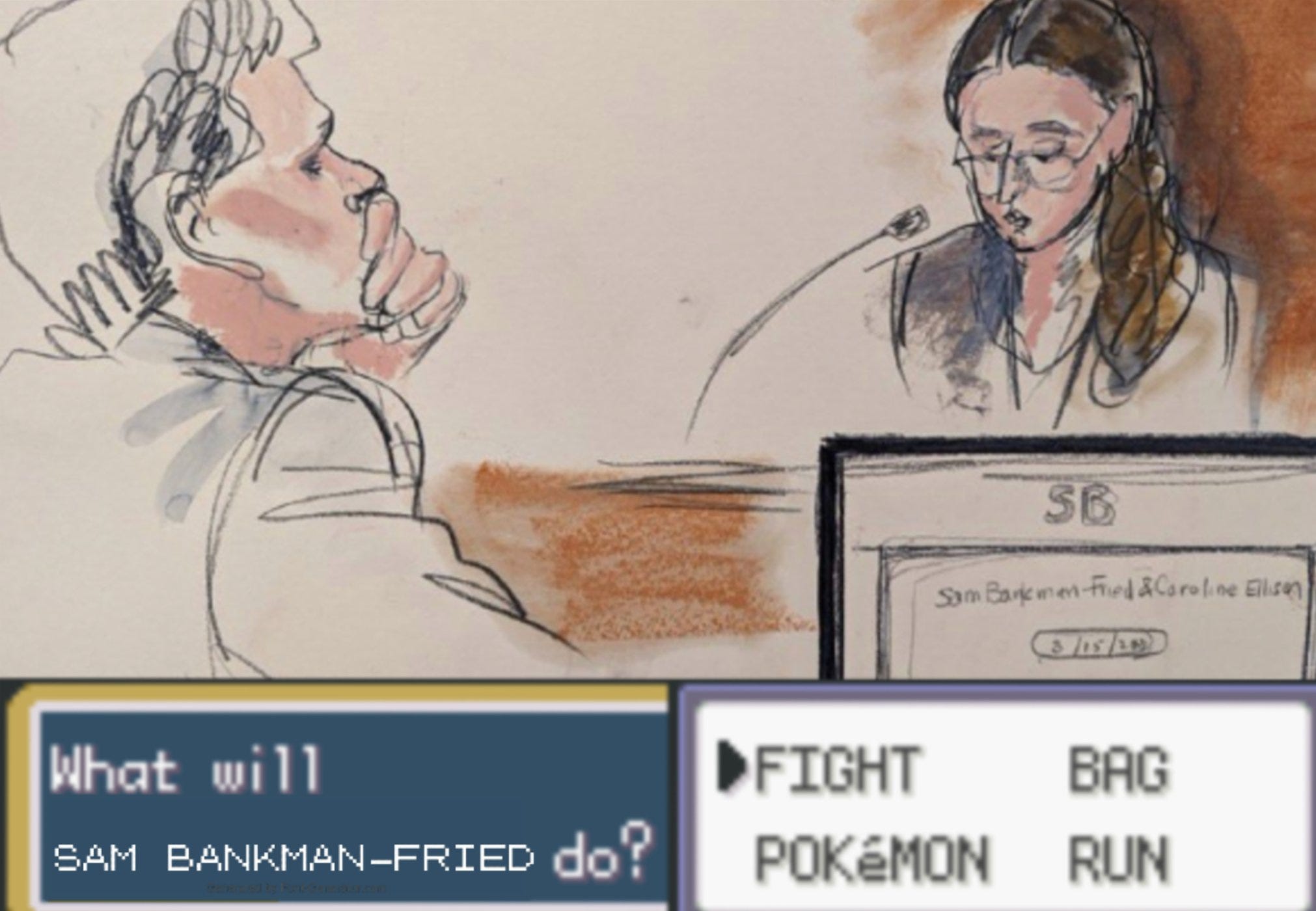
Of particular interest in Silver’s book is the case where he talks about Elon Musk and Sam Bankman-Fried (the first being one of the “malignant narcissists” mentioned before). In the first case, Musk is portrayed as being without fear, playing poker according to what is referred to as the “maniac” strategy—go all in, every hand—while SBF is portrayed as a utilitarian prepared to extend potentially flawed logic to a degree that frankly beggars belief in the telling.9
Indeed, Musk’s fearlessness extends beyond business to his physical well-being. His first appearance in Silver’s book is an account from Thiel about how—ostensibly as a a result of both impulsiveness and fearlessness—he crashed his MacLaren F1, and amazingly was unscathed. As Silver relates, “It’s not that Musk had made some rational calclation—that if you’re worth $22 million, you can just afford to buy a new one. Rather Thiel said, Musk hadn’t bothered to consider the possibility of a crash.”
The question here is, had Musk not considered the possiblility, or was he consitutionally unable to?
Crucially, besides their impulsiveness and fearlessness, both SBF and Musk seem to not really understand the implications of the prisoner’s dilemma—i.e. that many games are not zero sum.10 These things combined are a heady cocktail, when we’re talking about personalities that have Bond-villain levels of power.
Though they may not share every behaviour, the inability to see the world as anything but zero-sum is something they share with Donald Trump. Yes, it is concerning that there’s a Dark Triad narcissist who sees the world in fully zero-sum terms with their finger on the nuclear button, but what can you do?
To highlight how insane the zero-sum worldview is, even the most meme-level (and arguably cringe) business resources tend to have the need for collaboration built-in.11 One of the 7 Habits of Highly Effective People is to seek “win-win” situations, so it’s not as if this insight isn’t an informal Schelling point as well as one more formally described by (among other things) the logic of mutually assured destruction.
Even if you flip this argument on its head and still look to win in a zero-sum (or close to zero sum game), it’s likely that it is a more effective strategy to not think of the game as zero sum, or even if not seeking a compromise or asummetrical compromise in your favour, to at the very least put yourself in the shoes of your opponents.
Nate Silver quotes American general HR McMaster pointing out the need for strategic empathy, not for the compromise case, but to defeat your opponents, by understanding their success and exit conditions.
Other than on an instinctual level, the narcissist—as opposed to the psychopath—is perhaps less able to do this in order to act in their own self-interest. I’m on shakier ground here in terms of my reading, so I’ll just give an example and then wrap up.
To me, a good example of how these personalities might interact would be (with an armchair diagnosis, I know) in a recent episode of the UK edition of the Traitors, where the contestant Fiona (a Traitor, in the game) completely sabotaged her own game as the result of having her ego bruised, all the while proudly saying to the camera that she was executing a master plan (see Walker et al., quoted previously, “[w]hen threatened, individuals high in grandiose narcissism tend to blame and devalue others while denying their own weaknesses.”).
Her opponent (who was also a Traitor, and almost certainly also a disordered personality along the Machiavellian or Psychopath axes), calmly briefed against her and got her voted off the show while receiving no votes in return.12 The situation has more than a little of the Musk/Trump spat about it; no doubt if Fiona could have fired her opponent via tweet, she would have.
Just another day in the Corps
I’ve mentioned the books of Richard K Morgan in the footnotes, so indulge me while I use them to conclude my argument.
In the Takeshi Kovacs novels (as opposed to the Altered Carbon TV series)13 it would be hard to describe the Envoys as anything other than psychopaths—and in fact, not even subclinical ones, since the first page the Envoy Corps is mentioned, there’s a time jump to Kovacs watching a fellow member of the Corps being incarcerated on a future meeting, “She was going down for eighty to a century; excessively armed robbery and organic damage.”
To some extent the ability of Envoys (psychopaths) to use their lack of anxiety and remorse to reshape the world around them mirrors the main themes of Morgan’s other novels Market Forces and Thirteen—the latter a very explicit study of psychopathy. Perhaps Silver’s book is similarly a story of psychopaths, not risk takers, being able to reshape a world that can no longer govern their behaviour.
Okay, I mean in 2025, although I finished it on the second of January ‘26.
This is a massive and hand-waving simplification, but you should read the book. For Villagers, perhaps “institution builders” or “those that trust existing institutions” would be a better description.
I don’t recall childhood trauma (involving trust or otherwise) being mentioned either, but perhaps I have forgotten.
Subclinical psychopathy, to be clear. As an aside, the kind of “envoy intuition” described in the Richard K Morgan Takeshi Kovacs novels (Altered Carbon etc) sound an awful lot like the “tendency for dark personalities to exhibit relatively higher levels of nonverbal IQ” described by Paulhus and Williams.
At least by my understanding from reading the literature. I’ve read the papers, but it isn’t my area of course.
This is one of those terms that has started cropping up in self-help, in blogs (oops!) and in YouTube videos a lot, so I assume it has entered the cultural consciousness and I would also find it on TikTok, et cetera. As a result, I’m being careful to use first-hand academic sources. Doubly so as it’s not my area of study or expertise.
“Non-clinical” can be thought of as “high functioning,” in everyday use—bearing in mind this is not my area and I could be understanding the papers wrong. “Non-forensic,” as I understand it, relates to conditions that were previously only defined in cases where they became transgressive to the point of criminality.
Something most students of incentives would intuit, I suppose.
The operative example being whether you would risk all of humanity’s existence on a coin flip where the expected value on a successful call was a marginal increase of welfare for all of humanity.
I’m perhaps being a little unfair here. Maybe they see more grey than I allow for—although, as Silver notes in the book, SBF didn’t seem to be able to do that at the time of his trial. That’s not the case with Trump, however. He’s a zero-sum fanatic.
As well as many institutions and religions, even if this is sometimes performative in practice.
And went on to win, consistently getting few to no votes despite being accused on multiple occasions as a Traitor. Indeed, at least in the edit of the show, it seemed like other players preferred to walk away, or get voted off, rather than confront her.
As well as making the Envoys more generally palatable, they are switched from being the enforcers of the interstellar regime, its psychopathic, immortal, decadent core made flesh, to a plucky resistance against it. It’s easy to see why this makes sense for a mainstream TV series, but it does take away the force of both the moral ambiguity in the original, as well as the critique that (I think) it is trying to level at our present. Based on the plot of Market Forces, which is a near-future satire, Morgan knew what he was doing in Altered Carbon, Broken Angels and Woken Furies. There is one change they made for the TV series which I do think is genuis, but for the sake of spoilers I won’t mention it here.