
Unexpectedly, one of the threads of this blog that has developed over time, and that people have talked to me about, is the mentions of disordered personalities. That seemed interesting enough that I decided to break it out into its own post.
So with this week’s theme of “Can you spot a disordered personality?” in mind, let’s revisit some definitions and then talk about them the context of workplaces.
“To varying degrees, all three entail a socially malevolent character with behavior tendencies toward self-promotion, emotional coldness, duplicity, and aggressiveness.”
Paulhus & Williams (2002).
Obviously:
As in previous posts, I’m talking about the non-criminal/non-clinical end of the disordered personality spectrum here.
I’m not encouraging vigilanteeism—I’m mainly writing this so you can spot the signs and minimise these peoples’ impact on you.
The Field Guide
I’m adapting some content here from my review of Nate Silver’s book On the Edge, since I quoted a several academic definitions of non clinical/criminal Dark personalities (Narcissists, Machiavellians, and Psychopaths).
That post also covers the crossover (or not) with the Dark Triad, as originally explored by Paulhus and Williams (2002). We’ll reference that paper a lot in the next section(s).

A later (2024) article by Walker and McCann has some nice, terse definitions of the disordered personality types:
Narcissism
As a subclinical personality domain, narcissism covers a spectrum from mild to extreme (Miller & Campbell, 2008) and comprises two facets: grandiose and vulnerable narcissism. Grandiose narcissism is characterized by grandiosity, self-confidence, and exploitation of others with a tendency to rely on self-internal validation (Dickinson & Pincus, 2003; Zhang et al., 2017). When threatened, people with high grandiose narcissism may blame and devalue others while refusing to acknowledge their own weaknesses. Vulnerable narcissism is characterized by grandiose fantasies, oscillations between self-love and self-loathing, a fragile sense of self, a reliance on external validation for self-esteem maintenance, and hypersensitivity to negative feedback (Wink, 1991). When threatened, people with high vulnerable narcissism become defensive and resentful, and may show aggressive outbursts toward others (Wink, 1991).
Walker et al. (2022) in a different paper on faking good and bad on tests have several useful definitions, which I quoted in my previous post. For Narcissism, I just want to re-quote one point on what happens in the case of criticism or conflict (my emphasis):
Individuals high in vulnerable narcissism are characteristically hypersensitive to negative feedback and tend to act aggressively when their sense of self is threatened (Wink, 1991). Though grandiose and vulnerable narcissism share several core characteristics such as an antagonistic interpersonal style, self-importance, entitlement, and hypersensitivity to criticism (Dickinson & Pincus, 2003; Krizan & Herlache, 2018; Weiss et al., 2019), there is clear evidence that these two facets are distinct (Krizan & Herlache, 2018; Miller, Vize, Crowe, & Lynam, 2019; Walker et al., 2021).
The entitlement point is something that I think comes across a lot when you listen to these individuals talk—particularly in the political sphere.
Machiavellianism
Subclinical Machiavellianism is derived from the philosophical writings of Niccolo Machiavelli, a political advisor to the Medici family in 16th century Firenze (Christie & Geis, 1970). Machiavellianism is characterized by goal-focused manipulative and callous social interactions, including the use of long-term strategic planning to delay gratification for better rewards in the future, questionable morals, and a cold, cynical world-view (Christie & Geis, 1970; Furnham et al., 2013).
Psychopathy
Subclinical psychopathy is characterized by superficial charm, pathological lying, and lack of empathy, conscience, and remorse (Cleckley, 1951; Hare, 2003), existing on a continuum in the wider population (Berg et al., 2013). Psychopathy measures, such as the Levenson’s Self-report Psychopathy Scale (Levenson et al., 1995), were developed to measure the two-factor structure of psychopathy proposed by Karpman (1941). This two-factor structure comprises two related but distinct factors differing in their etiology and symptomology: primary and secondary psychopathy (Hare, 2003).
Both facets are typified by indifference to one’s own and others’ emotions, underpinned by an antagonistic interpersonal style (Miller & Lynam, 2012)…Egocentricity relates to interpersonally manipulative and antagonistic characteristics associated with perceived low social responsibility (Christian & Sellbom, 2016; Sellbom, 2011), callousness relates to lacking empathy and remorse and is associated with cold-heartedness, lack of remorse, and low empathy (Anderson et al., 2013; Sellbom, 2011), whereas antisocial is related to impulsivity, and antisocial behavior (Brinkley et al., 2008; Sellbom, 2011).
As in my previous post, I think it’s worth discussing the difference between Primary and Secondary psychopathy, so I’ll again quote Walker (2022):
Primary psychopathy is characterized by: (a) a lack of guilt and remorse, with elevated levels of callousness, manipulation, and socially desirable behavior (Hare, 2003), (b) having superficial affect (Casey, Rogers, Burns, & Yiend, 2013), and (c) deficits in affective empathy (Wai & Tiliopoulos, 2012). Primary psychopathy is also associated with lower levels of fear (Patrick, Bradley, & Lang, 1993) and lower indications of repentance (Hare, 2003; Lee & Salekin, 2010).
Secondary psychopathy is characterized by higher levels of antisocial behaviors such as aggressiveness, impulsivity, and anxiety (Levenson, Kiehl, & Fitzpatrick, 1995). These types of characteristics are potentially a result of experiencing strong emotions which are unable to be effectively regulated (Hare, 2003). Additionally, individuals high on secondary psychopathy have been shown to possess guilt and fear responses not typically observed in individuals high in primary psychopathy (Lykken, 1995; Wallace, Malterer, & Newman, 2009).
A Narcissist and a Psychopath Walk into a Bar Their Place of Work
To discuss some of the heuristics you can use to validate a hunch, the study contained in Paulhus and Williams (2002) has some useful data and discussion, so I’ll quote from there. It contains a lot of references to prior studies on the different personality types, which are interesting if you really want to go down the rabbit hole!
First up, I’ll note that all three Dark Triad personalities tend to lie, a lot. So if you have somebody that often says things where you think “that can’t be true,” or “that must be an exaggeration,” then perhaps your gut is telling you something.1
The other things they have in common are a lack of empathy, callousness, and a core of aggression (either passive or straightforwardly aggressive).
I’ve noticed weird “fight or flight” impulses tied to meeting people like this, including a time when I was introduced to an older gentleman at a wedding. I couldn’t tell you why—but I felt he was squaring up to me, for no discernible reason. I’m certain he was a disordered personality.2 Why he gave me that feeling, I’ve never been sure.
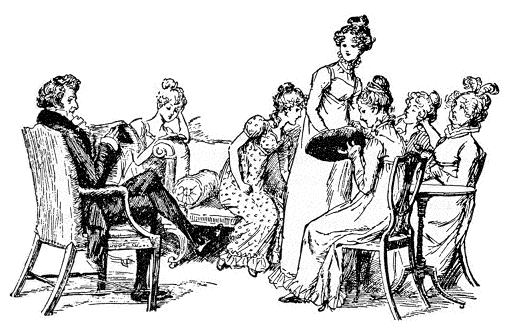
Before we go on—a pop quiz: What are Mrs Bennet from Pride and Prejudice, Homer Simpson, and Wallace from Wallace and Gromit? (Answers in the footnote)3
Narcissists
Finding Narcissists is usually pretty simple, especially grandiose ones. They want to be the centre of attention and at the centre of gravity for any social network.
Grandiose and vulnerable narcissism [share core characteristics]:
an antagonistic interpersonal style, self-importance,
entitlement, and hypersensitivity to criticism.
By definition I’m talking about non-clinical cases (both for Psychopaths and Narcissists). These are, after all, people that can hold down a job and go unnoticed as problem personalities by many people.
In my experience, drama seems to follow these people, but they often also manage to stand above it. At the very least, I’ve noticed with Narcissists, they don’t so much stand above it, as people will go out of their way to excuse their behaviour, usually (I think) out of fear.
A more charitable read could be that somebody’s behaviour is only going to improve if you cut them some slack. Maybe they’re going through some stuff. Disordered personalities drive a truck through this loophole in human social norms.
If there’s somebody in your workplace that is at the centre of everything, that everybody speaks well of, but also everybody seems to tiptoe around—bingo! You’ve found your candidate.4

A heuristic that is useful is the degree of delusion for the three personality types. Paulhus and Williams (2002) describe that Narcissists are the most self-involved, and least grounded in reality, “narcissists have a strong self-deceptive (i.e., low insight) component to their personality (Raskin et al., 1991; Paulhus, 1998),” followed by Psychopaths, especially “clinical range” ones—Machiavellians, by contrast, are more “reality-based in their sense of self.”
What this meant in studies that surveyed student populations was that a good (but not perfect) predictor of Narcissism was where respondents over-estimated their own intelligence, “narcissists and, to a lesser extent, psychopaths tended to overestimate their intelligence… whereas Machiavellians did not.” (Paulhus and Williams, 2002)5
Back to Mrs Bennet—her own desire to be at the centre of her children’s matchmaking results not only in delusional behaviour but also from a goal-oriented perspective, near catastrophe in actually reaching her desired outcome.6 Entitlement, lack of empathy and social awareness are her characteristic traits.
Another heuristic I’ve seen is the following, that only Narcissists can say: “You hurt me! It’s your fault!” as well as “I hurt me! It’s your fault!” Especially with the victim complex inherent in vulnerable Narcissism, there’s little room for them taking responsibility for their actions, and lashing out or looking around for someone else to blame is the norm (look at Trump over Iran).
Grandiosity and drama resulting in sub-dominant outcomes for Narcissists is something I’ve seen over and over again, and was recently played out in perfect fashion with Fiona (a Narcissist) on the BBC series The Traitors, or when Andrew Tate revealed his location while arguing with Greta Thunberg, leading to his arrest.
Final point—be a little bit wary of anybody that’s a self-diagnosed autist (I say this carefully, with diagnosed autists as friends and family). They might be a Narcissist using self-diagnosis to shift the blame onto a different condition with some superficially similar behaviours. The strategy makes sense—even diagnosed autism potentially has a limited comorbidity with vulnerable narcissism. Thus, it’s important to stress that they are different.
In my experience, my autistic friends occasionally display a superficially similar but distinct pattern of behaviour—things like slight selfishness in certain situations where they miss social cues, or a tendency to do most of the talking when a subject comes up they’re interested in (pot kettle black, I know). I can think of examples like a friend whose legs I had to lift up to clean around (more than once) as he lay on the sofa, but jumped up to help the second he was directly asked. Think of Wallace from Wallace and Gromit.
Simply put, in the words of this post, autists aren’t a—holes:
“The distinction here is between the person who’s often rude and the one who’s often, or at least occasionally, nice…Narcissists crave admiration, whereas autism desperately maneuvers for acceptance…The difference between autism and narcissism, [is] that one implies a high degree of non-sensitivity, whereas the other implies one of insensitivity; the former doesn’t know and the latter doesn’t care. The narcissist displays patterns of indifference and cruelty, whereas the autistic individual may feel remorse for some social blunder.”
For your friends and family, it’s easy to identify if they mean well. The difficulty of distinguishing patterns of behaviour for people you don’t know well, or sorting the claims of the self-diagnosed, is perhaps at the heart of the reason I think Nate Silver spent so much time musing on autism in his book—when he should (in my opinion) have been investigating disordered personalities.
When Musk did a ‘Heil Hitler’ at Trump’s inauguration, some clowns were attempting to excuse him based on his ‘autism.’ Being autistic doesn’t mean you can’t be a Narcissist, Psychopath or Dark Triad, just as being autistic doesn’t mean you are a Narcissist, Psychopath or Dark Triad. I don’t understand why this is hard to get.
Psychopaths
For psychopath-hunting, as documented by Babiak and Hare7 and others, if you’re in a large corporate, it’s a good bet to look at your boss and start going up the org chart. You’ll find one soon.
Subclinical psychopathy is characterized by superficial charm,
pathological lying, and lack of empathy, conscience, and remorse.
I remember being in an all-hands to be introduced to our new exec member and watching in disbelief as he stood at the front and said, while presenting a slide deck about himself (I paraphrase here due to brevity and length of time since then), “my PA said I should put a picture of my family here, before the dogs, but…” he then advanced to a slide of his dogs.8
A good heuristic for finding Psychopaths is that childhood delinquency predicts higher non-verbal IQ and SRP scores. Again, it’s not perfect, but it turns out, antisocial behaviour is a pattern, even if confined to relatively harmless things.
Psychopaths also lack anxiety. Think about the stories of that boss that had a major relationship issue, then appeared at work fine the next day, or gave out cake just before announcing redundancies.9
Although it doesn’t help you spot one, as mentioned above, Psychopaths are typically better at non-verbal communication cues, which is at least a way to distinguish them from Narcissists.10 Both are “associated with extraversion and openness.” (Paulhus and Williams, 2002)
If you need a personification of the (non-criminal) Psychopathic personality, then read almost any Richard Morgan novel—Takeshi Kovacs (Altered Carbon novels and TV series) and Hakan Veil (Thin Air) are psychopaths with a side of bipolar disorder, and Market Forces and Thirteen are just portraits of a psychopath.11
If you can’t spot a psychopath, unfortunately some criminal psychopaths can spot their victims just by walking gait. A 2013 study showed psychopaths were adept at spotting people vulnerable to victimization in this way.12
In the Paulhus and Williams paper, they find men display more of the Dark Triad traits, and that the strongest inter-correlation is between Psychopathy and Narcissism—which makes sense, since grandiosity is also to some extent a Psychopathic trait.
On which final point, it is possible to distinguish the three Dark Triad disordered personalities by their degree of self-aggrandisement:
On two objective measures, narcissists exhibited the most self-enhancement, followed by the psychopaths…In contrast, machiavellians showed no sign of self-enhancement. This difference is consistent with previous evidence that Machiavellians are more grounded, or reality-based, in their sense of self (Christie & Geis, 1970), whereas narcissists have a strong self-deceptive (i.e., low insight) component to their personality (Raskin et al., 1991; Paulhus, 1998).
Equally, they might just be a stand-up comedian.
I recounted the interaction to somebody who knew them better and, no surprise, others found that guy to be a bit weird and toxic.
Homer is initially just a bit selfish and incompetent, but arguably over time his behaviour changes to be actively malicious towards his family, and his characterization is that of a Narcissist. Mostly, his problems become their fault, and it’s why he becomes less likeable over time. Wallace is, depending on how you figure it, an eccentric man in a shed, or perhaps slightly ‘on the spectrum.’ Again, he’s often selfish (and Gromit suffers), but he is not grandiose, and shows remorse and contrition for his mistakes—unlike a Narcissist. In most modern adaptations of Jane Austen’s Pride and Prejudice, Mrs Bennet is portrayed as a Narcissist, and Mr Bennet as a co-dependent. That may or may not help you as a concrete personification. This is true in the Hollywood Keira Knightly adaptation, or even the recent BBC adaptation of The Other Bennet Sister, which features Mrs Bennet as a recurring character.
Related to the image, I think Hans Landa has some Narcissistic traits, but I wonder about the 2021 Hart et al. study on which facets of disordered personalities might lead to greater gullibility vis. strangers, which is Landa’s downfall. Their motivation was how often criminals are caught by simple tricks by law enforcement that require the criminals to trust law enforcement aren’t lying to them. They use the example of Dennis Rader, “When Rader asked why law enforcement lied to him, the interrogator matter-of-factly responded, ‘Because I was trying to catch you.’” The facets in question are “antagonistic narcissism; Tactics [antagonistic machiavellianism]; CT [criminal tendencies—think antisocial behaviour like violence].”
My personal pet heuristic is “people who leave voice notes in instant message app group chats.” Apologies to those that do—but I’ve found that, as well as leaving your mic on during conference calls is a strong red flag for future behaviour in a work context.
"there were some very strong objections against the lady.”
I’m thinking of the book Snakes in Suits here.
In the Psychopath Test, Jon Ronson in conversation with Bob Hare discovers that some psychopaths love their pets, especially loyal dogs—not because it’s a sign they’ve got some softer edge, but because they absolutely own and control the animals. It comes up in the context of Albert Dunlap, who has a huge oil painting of his dogs.
In the example I’m thinking of, the people had already been fired, and the boss was yet to announce it. He bought reduced-price cake to give to the team before doing so.
"The tendency for dark personalities to exhibit relatively higher levels of nonverbal IQ is intriguing but the implications are unclear.” (Paulhus and Williams, 2002) I was hand-waving in the main body of the post—Narcissists have the ability to pick up on the cues but don’t reliably act in their own self-interest.
As I’ve noted in other posts, most of these protagonists aren’t even non-criminal. Altered Carbon opens with Takeshi Kovacs on the run after engaging in criminal acts—although from memory, he at least took pains to use non-lethal ammo. Thirteen is literally a book about psychopaths, it’s part of the set-up for the world.
As an aside, it’s kind of fascinating that this is something that is apparently communicated in body language (Grayson & Stein, 1981, cited in the study mentioned).